

Fundamental Analysis
News and economics: the other side of the market
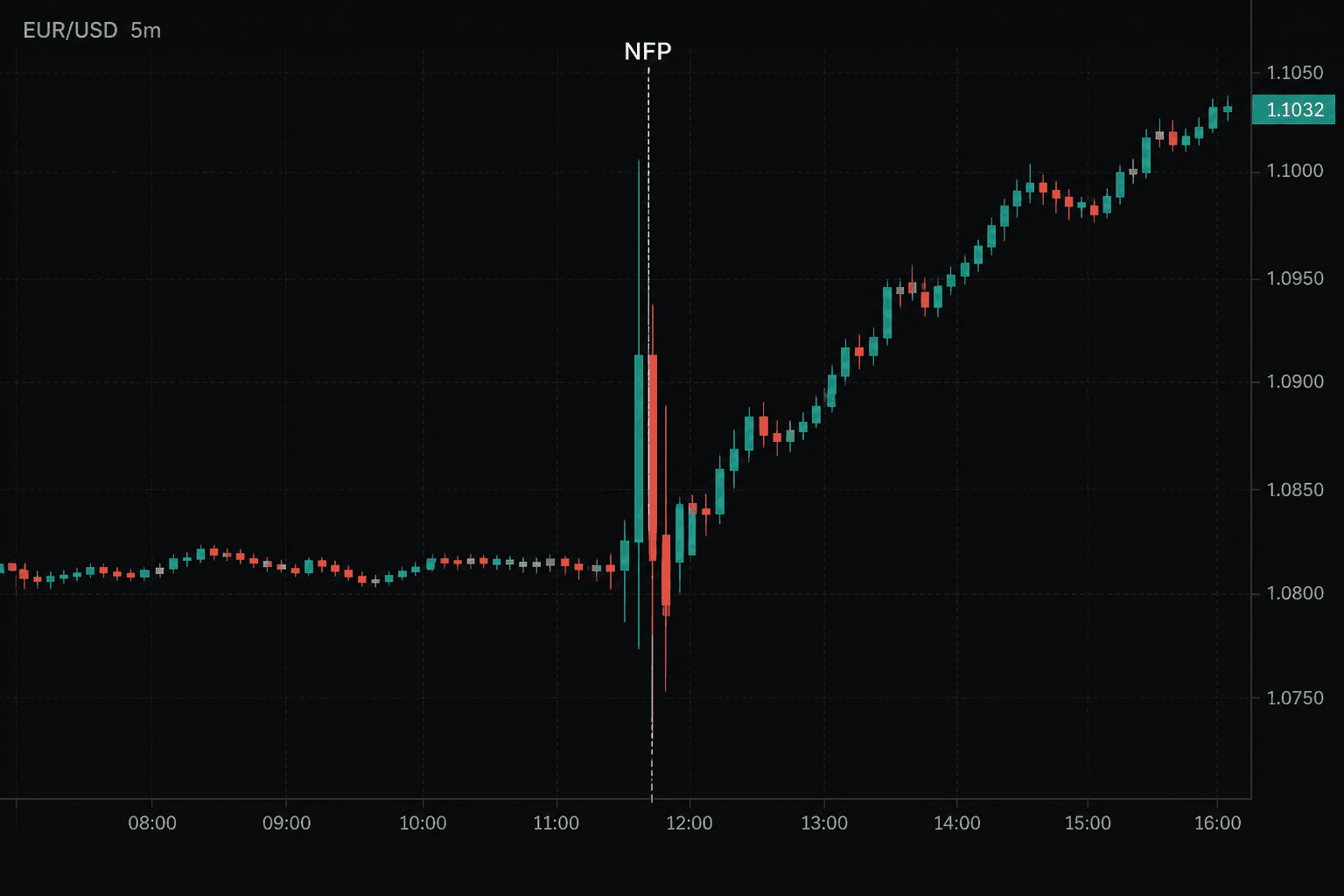
Every school above reads the chart. This one reads what's behind the chart: central bank decisions, interest rates, inflation, jobs data, and geopolitical events. These are the things that create the big trends that run for months.
We're not saying you need to become an economist, but there's a minimum you can't ignore: you must know when high-impact news is due (like US non-farm payrolls or rate decisions), because the market moves violently at those times and takes out stops in both directions.
The picture is a typical news print. Before the release the market sometimes coils, then the number hits and you get a gap or a huge wick, and some brokers widen the spread. Even if your technical idea was right, execution in that minute can stop you out far from the level you drew. That is why a lot of people flatten or cut size before the event, then come back after the dust settles.
Fundamentals also help on the bigger frame. If the Fed is hiking and the dollar is strong, buying every dip in gold with no context can grind you for months. That does not mean you never fade a headline. It means you know you are swimming against a current.
The best approach we've seen for an individual trader: technicals for entries and exits, fundamentals as a backdrop and a filter. Know why the market is heading somewhere, and stay out during dangerous news if your style can't handle it.
Key concepts
- Interest rates and central bank decisions
- Inflation and employment data
- The economic calendar and news timing
- Inter-market relationships (dollar, gold, oil)
Who is it for?
A minimum requirement for everyone, and essential for medium and long-term traders.